The long awaited debut LP from NYC’s FLOWER “Hardly A Dream” is finally set to arrive.
FLOWER’s tedious approach to writing/creating/drawing their debut LP was carefully thought out and the result is a monumental anarcho punk /crust record.
“Hardly A Dream” Takes us on a bleak journey through the dark side of society. As soon as you drop the needle a dark atmosphere is immediately created with a slow intro featuring arpeggio guitar work that builds into pummeling d-beat crust. The albums vocals then leave you with a feeling of being crushed by the ever-present weight of living through our modern world of late stage capitalism that was built on the falsehoods of the so called American dream, religious hypocrisy’s, nationalism, and the greed of humankind.
FLOWER take many cues from predecessors and are most often (and rightfully so) compared to NAUSEA but they also take a heavy influence from ANTISECT, SACRILEGE & other greats. The artwork has a very RUDIMENTARY PENI feel and the record comes with an amazing 24.5 X 34.75 CRASS style poster jacket. All art work was meticulously hand drawn and overseen by the guitarist Willow in true DIY style and spirit. Willow was also cool enough to draw up a special shirt for the record release featuring an alternative PROFANE EXISTENCE backprint!
Dark, heavy, galloping crust from the streets of London. AGNOSY is back to present us with a ferocious beast of an album that can only be forged by the anger and frustration of living in today’s world. “When Daylight Reveals The Torture” aggressively attacks evils such the current rise of fascism and animal abuse. It intelligently and passionately touches on the Afrin invasion and the revolution in Rojava and shows nothing but utter disgust toward the arrogance of humankind’s lust for greed and power that will inevitably lead us down paths of war and environmental devastation.
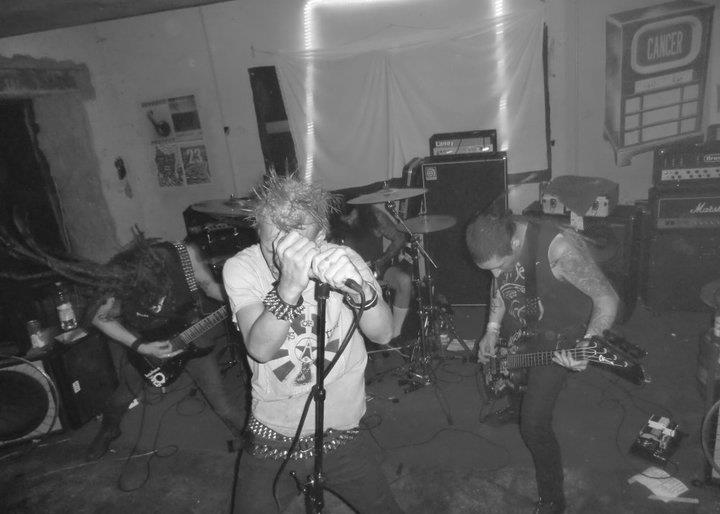
AGNOSY – Live at SCUMFEST in London. 2011
While lyrically AGNOSY are much more politicly straight forward this time around than on previous releases, musically they have expanded on their sound to create a dark and moody atmosphere while at the same time staying crust as fuck. To say they know what they are doing would be an understatement from this band of vets whose members have played in HIATUS, HEALTH HAZARD, and BEGINNING OF THE END.
Long galloping intros are followed up by traditional d-beat, fierce solo’s are then meet with vicious vocals and pulverizing bass in a brilliant recording captured by Lewis Johns at The Ranch Production House and was mastered by Brad Boatright at Portland’s legendary Audiosiege. We then pressed on deluxe heavyweight 150-gram vinyl, printed on reverse board jackets, and included an 11in x 22in gatefold insert to bring you a high quality and truly epic record.
PROFANE EXISTENCE – PO BOX 647 – HUNTINGTON WV – 25711 – UNITED STATES
The legendary crust classic is now available once again!
Authorized and released in cooperation with MISERY, S.D.S., & MCR Japan & Remastered by Jack Butcher at Enormous Door Studio we are beyond proud to make one one the most rare and sought after crust records available once again.
Fuck the scavengers charging punks exuberant amounts of cash on ebay and discogs. We worked meticulously with both bands and with Jack at Enormous door to bring you an updated version that kicks major audio ass while maintaining the original authenticity.
Released on deluxe 150 gram vinyl. With an 11×11 inner sleeve. Black Paper Jacket. Reverse Board Jacket.
Earlier this year we re-issued this legendary LP and sold over 950 copies in just 4 short months. For this second pressing we pressed 490 copies on Krystal Clear & 485 on Grey Vinyl with Black Mist.
Crystal Clear (Bullet belt no included) Grey With Black Mist (Bullet belt no included) PROFANE EXISTENCE – PO BOX 647 – HUNTINGTON WV – 25711 UNITED STATES
Stench crust the way it was meant to be played!
The UK crust scene of the 1980’s inspired band after band but no other band has ever reincarnated the sound of that time as well as SWORDWIELDER. Quite simply if you like crust, then this the album you have waited decades for.
Review by Craig Hayes from “Your Last Rites”… Swordwielder – System Overlord Heavyweight punk fanatics take note: System Overlord is a fucking triumph. The long-awaited sophomore album from Gothenburg stenchcore band Swordwielder is a brooding behemoth, constructed from the filthiest and heftiest strains of punk and metal. System Overlord shimmers with apocalyptic visions, and it’s overflowing with all the grim atmospherics and intimidating intensity that defines consummate crushing crust.
Too much hype? No way… And no apologies, either. Swordwielder deal in definitive stenchcore on System Overlord, and much like their full-length debut, 2013’s Grim Visions of Battle, the band’s latest release is a knockout. Swordwielder’s harsh, gruff and dark sound owes a significant debt to old school icons like Amebix, Axegrinder, Deviated Instinct, and Antisect, and they mix and mangle their influences and leave ’em to rot on the battlefield.
Plenty of hammering rage drives System Overlord tracks like “Violent Revolution,” “Savage Execution” and “Cyborgs,” and thundering epics like “Corrupt Future” and “Northern Lights” exhibit subtler strengths, mixing guttural growls and clean vocals with crashing percussion and dirge-laden riffs. Connoisseurs of corpse-dragging crust will love the brute-force belligerence of “Absolute Fear,” “Nuclear Winter,” and “Second Attack,” which rain down like merciless mortar barrages. As a rule, all of System Overlord‘s mammoth tracks chug and churn with grinding muscle, while reeking of squalor and decay.
Swordwielder exudes tightly coiled aggression from start to finish here—songs rise from the ashes of desolation, and resounding calls for action and resistance ring loud. If you’re a fan of heavy-hitters like Fatum, War//Plague, Carnage, Zygome, Cancer Spreading or (insert your favorite hefty crust crew here), System Overlord‘s trampling tempo and strapping sound are bound to appeal.
WILT combine old school metal and crust in a perfect hybrid that very few others have ever achieved. Prepare for a LP thats equal parts galloping d-beat crust reminiscent of bands like HELLSHOCK, and INSTINCT OF SURVIVAL, meets old school death metal in the vein of BOLT THROWER, MEMORIAM (old) SEPULTURA.
Here is a track from the upcoming LP
“Sermon for the Bootlickers”
Despite the inculcation of helplessness within each there remains great power. Ill at ease with such makes us ill. Learn to see the hand that feeds for what it is. You’ve been fooled if you think you’ve got no power. Refuse to be reduced to a consumer you’re a human being. Define yourself by more than wealth. Define yourself as a human. You don’t need what you’re being sold. Bend your knee to no authority but your own mind. You have the power to avoid the gilded trap. Avarice is what you’re conditioned for. Break the mold discover what’s really valuable to you.
WILT will be on in Europe this July / August will ELECTROZOMBIES From Chile
Wed, July 12 Hanover / Germany / Confirmed Thu, July 13 Bremen Fri, July 14 Mulhem / Germany / Confirmed Sat, July 15 Gent, Belgium / CrustPicnic / Confirmed Sun, July 16 Paris / France or Amsterdam / Nederland July 18 North-East France or West Germany July 19 Freiburg / Germany TBC July 20 Winterthur / Switzerland Fri, July 21 Zurich / Switzerland Sat, July 22 Biel / Switzerland July 23 Lausanne or Geneva / Switzerland
July 24 Geneva / Switzerland or Grenoble france
July 25 Treviso (or Milano or Bologna or Verona) / Italy
July 26 Ljubljana Slovenia Confirmed
July 27 No Sanctuary chilling day
Fri, July 28 NoSanctuary Confirmed
Sat, July 29 NoSanctuary Confirmed
July 30 Ilirska Bistrica/Slovenia or Vienna/Austria or Budapest/Hungary.
July 31 Wiena / Austrai or Budapest or / Slovakia
August 1 Brno / Czech Republic.
August 2 Prague / Czech Republic
August 3 Finsterwalde / Germany TBC
Fri, August 4 Leipzig / Germany TBC
Sat, August 5 Berlin / Germany / confirmed
August 6 Dresden
August 7 Wroclaw / Poland
August 8 Warsaw / Poland
August 9 Poznan / Poland
August 10 Szczecin/Poland TBC
Fri, August 11 Rostock / confirmed
Sat, August 12 Hamburg TBC
For this in the Seattle or surrounding area you can catch WILT this Saturday April first at Highline Bar with NOOTHGRUSH from Oakland.
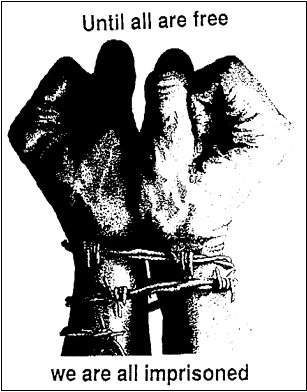
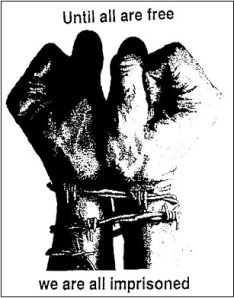
For the last few years I have been giving workshops to activists on prisoner support for movement prisoners. I believe strongly that we have an obligation to do support for people who have been imprisoned for their involvement and dedication to creating positive change in this fucked up world. Why should anyone risk their freedom if we are not going to support our prisoners who get punished by the state for taking actions that need to be taken?
People often tell me they would like to write to prisoners but that they don’t know what to say and are afraid of making mistakes. The reality is it is super simple, so in hopes of stopping any more excuses and persuading you to pick up the pen I figured I would outline the very few things you will want to avoid if writing to an inmate.
# 1 – Don’t Make Promises You Can’t Keep
Everyone hates waiting for a friend that doesn’t show up to meet you, or being stood up by that cute boy who promised he would call after last night. Well for people locked up behind bars, it is far worse because you may be the only contact they have to the outside world; so if you don’t follow through they become even more isolated. You may have great intentions when you write someone, so promising to write them every week or send them every book by Ursula K Le Guin seems like a sweet thing to do, but when you don’t come through you are not only failing a friend, you are also reinforcing those prison bars and the isolation they are designed to create. You would be far better off to just not promise them anything in the first place. That way when you send them a letter, it is like a lovely surprise that will brighten their day, rather than waiting for something that is never coming. Those Ursula Le Guin books then becomes Gifts, rather than making them feel Dispossessed. The short of it is, only make promises to prisoner IF you know for sure you can live up to them, and if you promise something you must follow through.
# 2 –Don’t Complain – Stay Posi
The point of writing someone inside is to help them feel connected, to help them escape; if not literally them metaphorically (If you try to hide a file in your letter it will get confiscated and the prisoner will get in shit for it). Remember why you are writing. We all have shitty days, and often want someone to wine about it to who will listen, but no matter how long you had to stand in line at the bank or be put on hold by your cell phone company – it will never compare to how much time a prisoner spends waiting in lines. Send your complaints to the editor, not the prisoner. A prisoner doesn’t want to hear about your shitty day and petty drama that they can’t effect; they would likely much rather hear about the awesome dog you played with, the rally you went to, the great book you just read, or the cute baby who beat your ass at chess yesterday. Hell, if you can’t think of anything to write, draw them a picture or cut out some photos of wildlife or cute kitties from a magazine. Some folks also love crosswords or sudokus.
# 3 – Don’t Say Stupid Shit
Maybe that sounds too obvious, but let me explain. Every letter you write to a prisoner is going to likely be read, and especially if you are using email through prisoner correspondence sites like Corrlinks which are recorded and copies are kept. So if you decide to tell Ted Kazcinski you think he is a hottie so your going to make bombs to send to people he doesn’t like, not only will you likely get raided by the FBI, but he will also end up in the hole. Yup, prisons read your letters for a reason, and if you say anything about illegal shit you are involved in or people you know are involved in, the prisoner will get punished for it and it could even be used against them in later court dates. I know this might sound like common sense and thus not need to be stated, but lets be honest here – common sense is anything but common.
# 4 Don’t Be a Creepy
I remember when my friend Kelly went to jail for G20 bullshit, she started getting these letters from some fucking creep hitting on her and telling her she was hot (from the photos the media was using of her from the riot). THIS IS NOT OK. It is not OK to be a creep, whether it is hitting on the cashier at the grocery store who is paid to smile and be pleasant, the waitress at the caffe who needs her paycheck and tips, or in this case, a prisoner. These folks are literally a captive audience unable to smack the fuck out of creeps who deserve it do to their situation. So even if you do think old Uncle Ted is the bomb, keep it to yourself. Sending a letter with uninvited sexual content is like sending them an emotional letter bomb.
If you are truly intent on having that type of correspondence with a prisoner to fulfill some sexual kink that turns you on, OK; there are actually websites for prisoners looking for a flirty pen pal or relationship. In the end it is about consent; if they want that type of contact, let them seek it out. Don’t harass prisoners who are not asking for you to objectify them while they are locked up.
# 5 – Have No Expectations
I started writing to prisoners a few years back now, and I have been lucky to get a few really good pen pals out of it, and to form real friendships that I believe will outlast their prison sentences. I have had prisoners send me artwork, poetry they wrote, books they wrote while inside and of course many letters. However I have also written many letters to which I have never seen a reply – and that is totally OK. The reality is that prisoners have far less access to resources than we do. Even if you are poor as fuck like me, and run out of money every month, or work some minimum wage shit job, you will have far more money than most prisoners. In the colonial nation state that calls itself “Canada”, an average prisoner makes around $2-$3 a day… Yes, you read that right, per day, not per hour. Unlike prisoners south of that imaginary colonial line, all stationary, toiletries, and personal care items must be purchased using what the prison labels “earned income.” What this means is that for a prisoner to write you a letter they must use their prison wages to buy the paper, pen, envelope, and stamp; at whatever price the prison canteen sets for these items since there is not competing businesses inside a prison. On top of that, time might seem like something a prisoner would seem to have an endless supply of, but really from people I have known who served ‘time’, it doesn’t seem to feel that way when you are on the inside. So what I am saying here is when you write a letter to a prisoner, have no expectations. Teat it like you are sending your words on the wings of angels, and if you do get a reply, remember how much that person had to give up in order to return your correspondence. Often many of us tend to take our relationships for granted, you simply can not do that with someone who is a captive of the state.
Beyond that remember the basics, your letter will need to have a return address (I often write my return address on each page in case the prison decides to fuck with them by “loosing” a page, It is also a good practice to number your pages for this reason), as well as the prisoners legal name (and number in the US) needs to be on the letter. Don’t put stickers, stamps, perfume, glue or glitter, on the pages or the prison may confiscate the letter or deny it. A less obvious one is that most prisons do not allow you to send blank paper, art supplies, or extra envelopes or stamps – demanding instead that the prisoner purchases those from the prison itself.
Prisoner support used to one of the main issues in the punk activist community, but over the last decade prisoner support seems to have been somewhat overlooked in punk. As I stroll through our feed on social media outlets, I see plenty of comments and photos showing support for those out on the streets marching against police brutality. That’s great! …But our support cannot end there. The United States has the largest prison population on the planet. People are being incarcerated everyday. Those on the inside need our support.
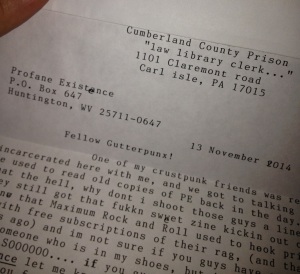
PROFANE EXISTENCE has always been on the forefront of letter writing campaigns and getting issues of PE to those locked up behind bars. Last week we received our first letter to the new address in WV from someone on the inside. Getting letters like this is a mixed feeling. On one hand you are happy to receive it, to write the person back and to hopefully give them something to look forward to. On the other hand, it’s a grim reminder of the disgusting prison system that locks people up like animals; separating them from the outside world, from friends and from loved ones… Always knowing that it could easily be you in their shoes.
Although the PE zine hasn’t been as active in recent years, we plan on resurrecting it in 2015 and it will remain free to prisoners. In the meantime we have plenty of copies of old issues lying around that are free to prisoners and we are always happy to write a letter. If you or someone you know is on the inside and want some issues of PE or just a punk to correspond with, please write us at either our WV or CO address. We have a long list of volunteers that are happy to contribute to writing campaigns and would love to hear from you
Love and Support.
The Profane Existence Collective 2014
Profane Existence
PO Box 647
Huntington WV
25711-0647
Profane Existence
8793 West Colfax Ave
Lakewood CO
80215
(Penny Rimbaud holds up the recognizable Crass banner reading “THERE IS NO AUTHORITY BUT YOURSELF” in the final moments of their performance. August 7th, 2014.)
Crass has such an established legacy within punk, anarchist, artistic, and radical circles that it seems somewhat absurd for me to keep asking questions about them. Yet, whenever I think I have a firm grasp upon the thoughts, actions, and art of the people involved in Crass, my grip is weakened by their defiance of expectations, nuance of complexity in their continuing work, and their adamant refusal of labels. Perhaps this is their greatest gift to us, i.e. their constant shaping of straight lines into question marks and their insistence on holding up a non-forgiving mirror not only to themselves but also to all of us. In some ways, Crass therefore has a philosophical position not too dissimilar from Socrates, that is, they are somewhat like sand in that the firmer a grasp you think you have on them and their thoughts and art, the more they slip through your fingers. The very debate surrounding the re-mastering and re-issuing of the six Crass LPs is a case in point on the open discussion they continue to inspire. Whether you are a purist expecting these artists to live up to your idea of anarchy and not “sell out” or a sympathetic consumer hopeful the re-masters will somehow reach new audiences that other formats might not, they have at the very least evicted a reaction from the mainstream and punk rockers alike (inspiring love and adoration from anarcho/crust followers who will never again have as inspirational an example as Crass, as well as visceral dislike, criticism, or even hatred from the likes of the Exploited and Special Duties).
And so, we can continue to discuss and debate what Crass is and was. Central to this is the question, what did Crass write? Did they perform poetry? Punk rock? Noise/free jazz? Pop songs? Political manifestos? One thing seems certain, that Crass wrote, performed, and recorded what they wanted to, regardless of whether it would meet punks’ approval, or have the slightest measure of convention, accessibility, and least of all marketability. Yet, there is a relatable aura of authenticity surrounding Crass that punk audiences did (and continue to) relate to, even when they themselves were the target of Crass critique. At one point, they were outselling the top acts in Britain, all from their country home, utilizing only independent and D.I.Y. networks. And if you doubt it, you were (and still are) welcome to write or visit to discuss with the actual artists. They have nothing to hide, for they live according to their principles and pleasures.
If we take them at their word, and in this case I believe we should, Crass wrote love songs, though as aesthetically far from the doo-wop and bubblegum sounds that label is so often associated with. In their first experiment in long-form free-jazz/punk Yes Sir, I Will, Crass addresses the precise question of what they are and what they sing about. Outraged by the question of “why don’t you write love songs,” Libertine shouts, “Everything we write is a love song.” In other words, on a record focused on anti-war messages, love for the lives destroyed by war and love for those who might be saved by peace is the guiding inspiration. Ultimately the anger and passion contained within their art was done out of love for the people and goodness within the world, as well as the hopeful love of a future world and a pure freedom. This love, however, must be unconditional, and the aphorism from Penny’s print (from Exitstencil Press) of “Love is All or Love is Not at All” was clearly the guiding light for the 2014 version of Yes Sir.
(A print hangs in the front room of Dial House)
On the centennial year of World War I, Penny Rimbaud and Eve Libertine assembled a group of diversely talented musicians to perform Penny’s revision of the “Yes Sir” poem. This was only to be performed once (as are all improvisations), at the annual Rebellion festival in Blackpool. Though Crass itself never performed in commercial venues, this ensemble performed at the largest punk festival in Britain (and one of the largest in the world). Of course such a large performance carries certain risks regarding sound as well as audience reception. To heighten expectations and excitement, this performance inaugurated this year’s Rebellion festival, as it had the opening slot in the Empress Ballroom on Thursday afternoon. The performers walked out onto a solemnly lit stage to the sound of your typical applause, heckling, and hoots-n-hollers. Penny grasped his microphone and said, “We’d like to dedicate this set to all those who have died, are dying, and will continue to die in the killing fields of political and corporate madness. And blessings to the people of Gaza.” Immediately following this dedication, much to my (and I suspect others’) surprise, the band launched into the opening chords of the Who’s “My Generation,” setting the stage for a recollection and rumination on the punk generation or so-called ‘punk movement.’ This would prove to not be the last of their musical departures from the three-chord, fast-paced accepted punk formula.
This version of Yes Sir, I Will was not a simple rehashing of the 1983 Crass record. No, this was both a re-writing and a re-imagining in word and sound. Some of the original “Yes Sir” shined through, such as Penny’s beautiful and Beatlesesque “what did you know, what did you care?” though sung in this live performance in a lower register than the original record, providing a melodic, almost lullaby-like reprieve from the sonic tidal wave that was occupying the ballroom. Eve Libertine also brought in the classic Crass “Fight war not wars,” “everything we write is a love song,” “if there were no butchers, what would people eat?” sections originating not only in the 1983 Yes Sir but also from Crass material spanning their entire recording career. Pen’s “Acts of Love” also shined in at times, most especially in the opening verses. Yet, despite these aspects of original, older work, the Rebellion performance definitely added components of 21st century culture and technology.
For instance, a particularly poignant moment in the performance was when Penny declared that while people are starving in the world, too many of us are “tapping tittle tattle texts” and “sending selfies to ever-absent friends” at which point the music ceased and the performers all took phones out of their pockets. “Hello? Where are you? Hello? No, I can’t talk now.” This was a brilliant display of the distracting, self-absorbed, and rude qualities that mobile technologies have disseminated. There were also moments of reflection upon Pen’s lifetime, ranging from references to the Beatles, to engagement with punk rock, to critiques of Hollywood, media, and war.
To those who were there, it should come as no surprise that Pen would describe the sound as inspired by a “Zappa meets Coltrane” space. There were no breaks here in the long-form improvisation. And in addition to the typical rock instrumentation of drums, bass, and guitar (though I don’t mean to belittle these musicians as typical, as they were far beyond that), there was also a wonderful jazz sensibility and complexity added by saxophone and cello. Sonic registers typically associated with punk spaces? No!…and therefore all the more shocking and powerful. Also incredibly important to the success of this performance was the visual aspect. The contrast between Penny moving, jumping, and marching around the stage and Eve solemn entrapment at the microphone provided a visual stimulus that nicely complemented the sonic aesthetic.
Behind the musicians flickered brilliant images by Gee Vaucher, fluctuating seamlessly between beauty and innocence, to death and violence. These images nicely complemented Penny’s and Eve’s cries for us to take responsibility, for us to look beyond mere negative blaming and start looking toward positive action. Pen later told me that when you point your finger to blame someone/anyone, you should really be looking into a mirror, “the responsibility is ours.” I therefore like to think of Yes Sir, I Will in its new incarnation as an invitation to self-reflect, both for punks and everyone else. We are invited into a discussion about what authority means, who is deserving of blame, and what we want to do. After roughly 45 minutes, the jam came to an end, and the performers left the stage to loud applause. We had all been on a journey of sound and ideas quite unlike anything else that would grace the stage at Rebellion for the rest of the weekend.
(Perhaps the best summation of life and art at Dial House, “Life is like jazz…best when improvised” plaque on the back porch.)
Is this punk rock? In that it defies expectations of a listening audience, yes. In that there is a radical political message prompting not complacent agreement but active engagement, yes. In that it was performed by three members of punk’s most important band, yes. However, the most encompassing answer I can offer (and one that I would like to think Pen, Bronwyn, and Gee would agree with) to the question of ‘is this punk rock’ is who cares. Why is it important that we classify art and thought? It simply is, and if that means that some punk rockers may not accept it, so be it for it shall be their lost opportunity at reflection, experience, and perhaps even love. They have challenged us to embrace the “fuck you” to institutions of power and murder, but also to eventually move beyond this visceral anger towards a state of universal, unconditional love. I know the new script will be widely disseminated eventually, and I hope we are all open enough to encounter it and truly grapple with the ideas and invitation therein.
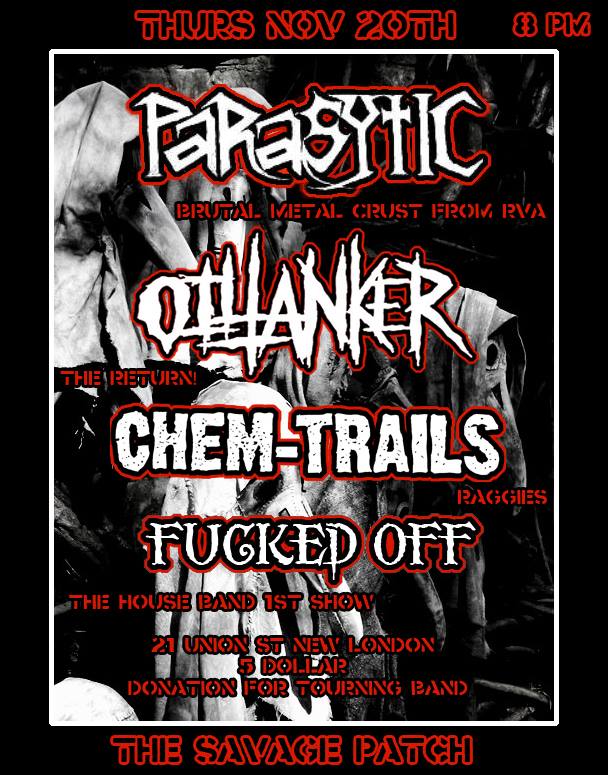
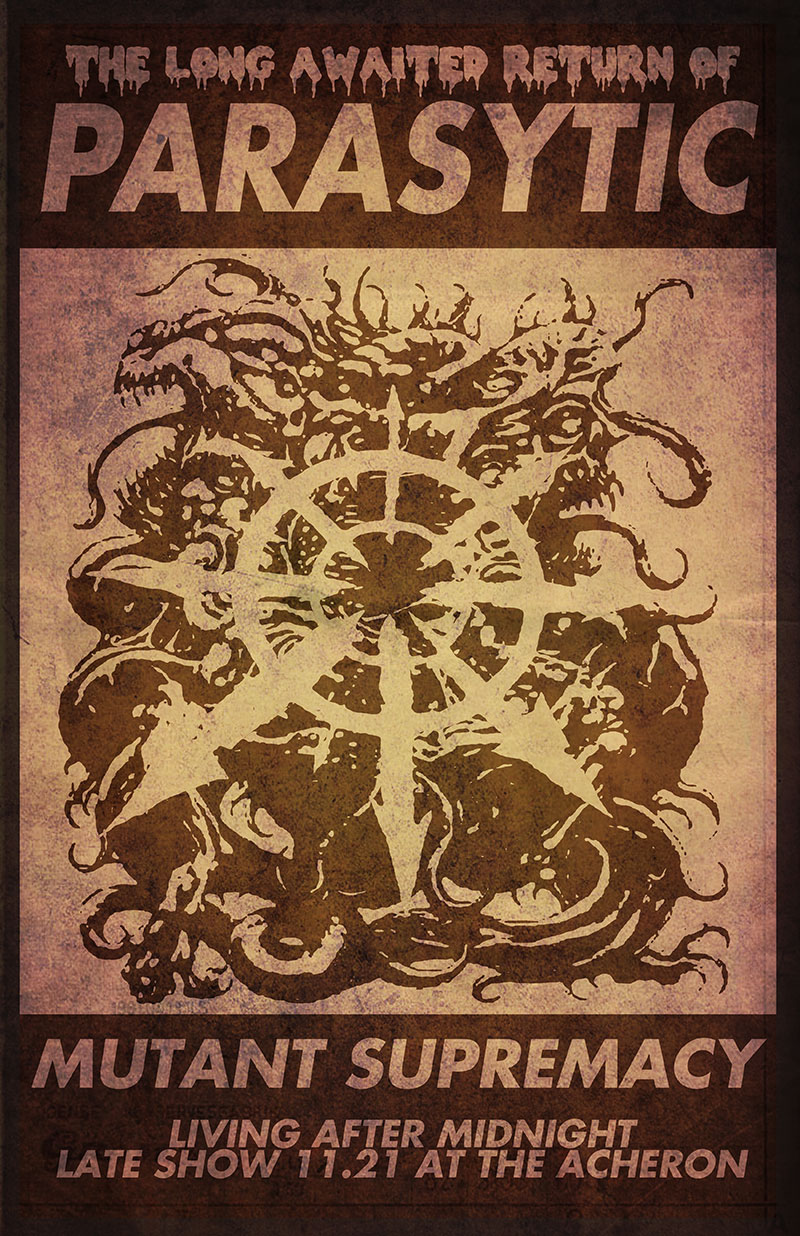
When a band get’s back together after disbanding we tend to use terms like “Back from the dead”. However in the case of Richmond’s PARASYTIC I don’t think that term fits. If you ask any member of the band they will say that PARASYTIC never broke up but suffered from a period of inactivity. Mainly due Nick’s aggressive tour schedule in his other bands, Ethan’s travels abroad, and Matt recently becoming a father. However after a long two-year hiatus the good news is that PARASYTIC is back. They have kept the reunion somewhat low-key while practicing old material and writing new songs. In the recent weeks however PARASYTIC let the proverbial cat out of the bag by announcing not just their long anticipated return but also a mini tour of the northeastern United States to coincide along with it.
For those of you that have not heard PARASYTIC, I suggest you remedy that situation as soon as possible. PARASYTIC play an absolutely brilliant blend of metal, punk, thrash, and crust. They have been referred to as the United States answer to bands like CONCREATE SOX and THE ENGLISH DOGS. PARASYTIC’s lyrics range from animal rights, to the horrors of war, disgust at puppet politicians, human liberation and much more. With amazing riff’s, harmonizing solo’s, pounding bass, and thunderous drums, combined with Ethan’s onstage antics it is impossible to see PARASYTIC play live and not be impressed. I was fortunate enough to drive PARASYTIC on their first tour in February of 2008. We spent a few weeks on the road starting in Richmond VA and working our down the east/gulf coast all the way to Mexico City and back up the Midwest. Every night was a blast and it never got old seeing these guys play. Spending time getting to know them was even better. PARASYTIC toured extensively in the following few years playing shows all over the United States and spending a month playing the European squat circuit in 2011.
Tonight PARASYTIC take the stage at Strange Matter in their hometown of Richmond VA for the first time in over two years. They will be joined by VISIONS OF WAR (Belgium) NO/TOMORROW (RVA/SC) SEX DWARF (Sweden) and WRATHCOBRA (Pittsburgh). On Thursday they head to New London Connecticut to begin a short mini tour. In my opinion PARASYTIC is one of the most important bands to ever come out of the United States. I for one am completely thrilled to see them active once more. It’s rare these days to see a band that is political and sincere as well as extremely talented and energetic. If you have a chance to see them at any of their upcoming shows you wont be disappointed. LONG LIVE PARASYTIC!!!
With the rise in popularity of the ideas of urban gardening, deep ecology, and permaculture amongst activists, anarchists, and subcultures such as punk often questions of ethics seem to have become simplified to the equation of SUSTAINABLE = GOOD. Yet often all kinds of cruelty can be hidden behind the veneer of that buzzword sustainable.
The unfortunate reality is that simple fixes rarely offer much beyond false hope and easy ways out. Perhaps they help people to ease their personal guilt by assuming they are not part of the problem (everyone else is), but is this any more than a self serving delusion?
The farm I grew up on near Kitscoty Alberta. This picture looks out the window of my mothers bedroom over the garden and barnyard
I grew up on a small family run farm in Alberta, 10 miles north of a town you have likely never heard of, with a population under 700. My mother grew up on that same farm with her two brothers. Her dad and his family lived there for many years, they had immigrated up from Nebraska where the family had farmed for a few generations since their original migration from Scotland, where again they had been farmers. It would be fair to say that farming is in my blood, so to speak (or perhaps I have just been reading too many Vampire The Masquerade books as of late?) Either way, I feel at least semi-competent to write about some of the ‘sustainable’ realities of small scale farming, drawing on my personal experiences.
I have many memories from growing up on the farm, from playing in the garden and eating carrots straight out of the ground with the dirt still on them, to collecting eggs from the chicken house, or chasing the turkeys for fun, being chased by the turkeys (which wasn’t so fun), or moving cattle from one pasture to another by horse back. There were some great memories too; picking saskatoon berries, wild raspberries that grew in the coolie, or building forts and campfires in the bush by the ravine. However, there were also just as many memories that were not so wonderful to look back on. Branding cattle with a hot iron as they screamed, or castrating steers — many city folks don’t realize you do not eat cows, and you do not eat bulls, you eat a male who had it’s nuts cut off so the flesh will taste better. All of which could be argued as sustainable.
Now I recognize that not all this is relevant to the popular trends I see amongst self styled alternative people over here on the west coast, as most of the folk punks are more into having pet goats and living on boats rather than farming beef or dairy cattle for auction. So I will try to keep more focused on the aspects of small scale farming that would be more of interest to the DIY crowd with their fantasies of farming and sustainable farming.
Chicken Squawk
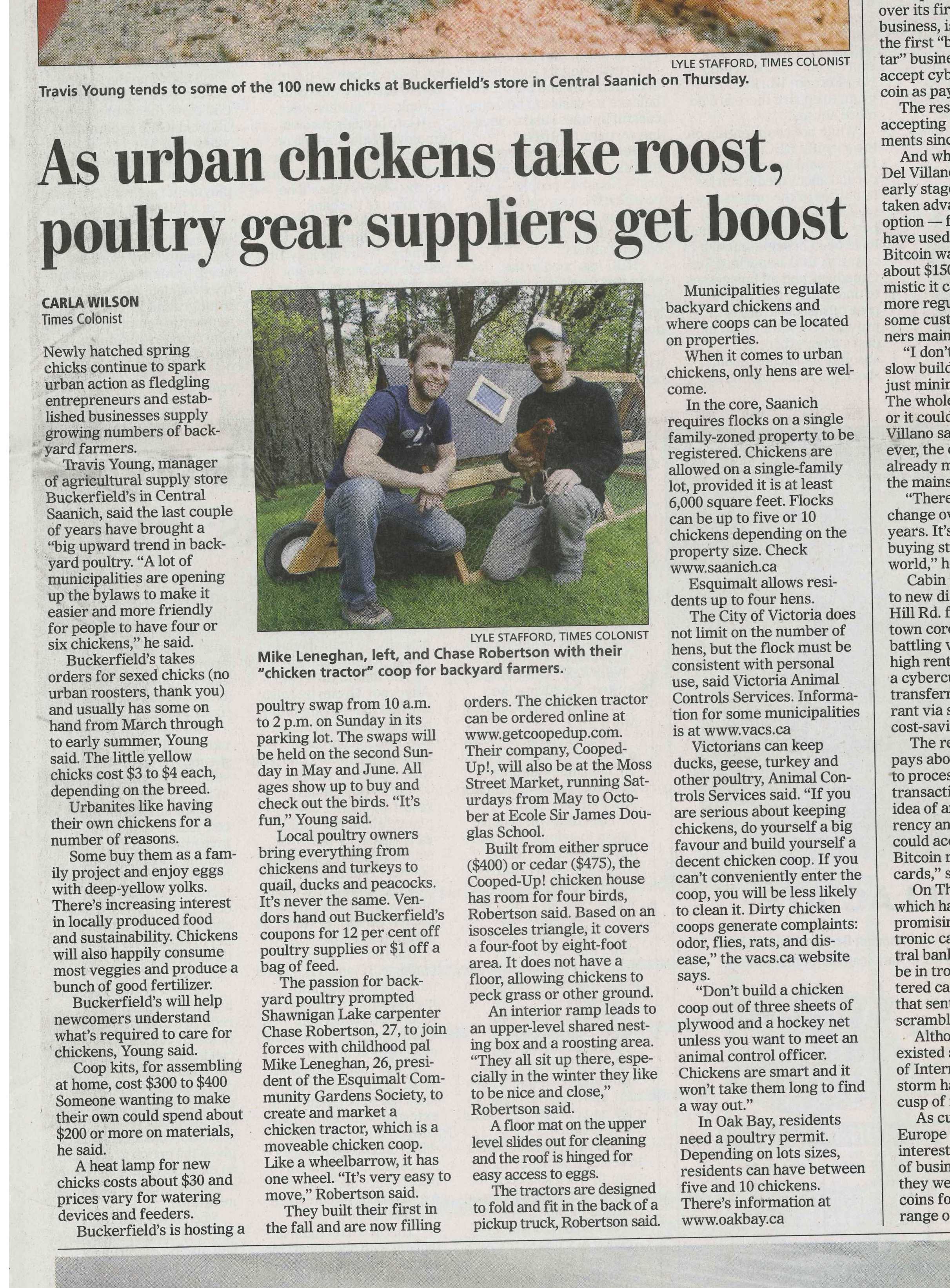
One of the more popular trends amongst the urban radicals is having back yard chickens, to collect and eat their eggs. Where I live, in the Cascadian bioregion, it has become almost as cliché to have 6-10 birds pecking around your back yard of your community house as it has to wear Carhardts, have a large dog, and all black clothing, or to play banjo. Unfortunately, I also live in an area where one thing that is not popular is sticking around. The radical community here tends to be quite transient in nature, with lots of college kids, traveler punks, and others folks who often didn’t come from here and even more often don’t have much intention of putting down roots. This is a common frustration to those who are part of long term projects propelled by volunteers, but none the less, it has its pros and cons. However for the chickens pecking the dirt and laying those golden eggs, it is a much bigger problem. An average chicken may live up to 8 years, which is far longer than the school term, or even a bachelors degree. A quick peruse of Craigslist at the right times of year will give you a good indication of just how expendable these animals are to many of the people who are excited in September (at the beginning of the school term) to build a chicken coop for their back yard. But even for those who don’t intend to go traveling or tree planting soon as the summer hits, few want to care for a chicken until it dies naturally of old age. You see, chickens only lay a lot of eggs when they are still fairly young, as they get older they will produce less and less. For many of the urban agriculture enthusiasts, a chicken that doesn’t lay eggs is just work with no pay off.
But the plight of the urban chicken doesn’t end there — or more accurately; it doesn’t begin there. You see, chickens don’t just appear, and they are not brought by the stork to deserving families, they come from somewhere – or in other words, someone breeds them. Few of the breeds of chickens people farm have any resemblance to wild breeds, and wild chickens are pretty rare these days due to our destruction of wildlife habitat for cities and farm land; never mind that there was chickens, like Europeans, are an invasive species to this part of the world. So most of the domesticated birds come from a hatchery; either directly – or indirectly.
I remember how exciting it was for me as a kid to order chicks. We would get a catalog in the mail, with pictures of the full grown birds, and you would select them by recording the order number of which breeds you wanted to buy. A few weeks later, you would get a large cardboard box in the mail which would be chirping. Upon opening it, you would see it packed full of fluffy yellow chicks, divided and layered with cardboard dividers so they could fit more into each box. Every so often a couple would die while in the mail, so you would get a few dead ones in every box.Kinda like two scoops of raisins, right?
An important thing to note is, that they also were separated not just by breed, but also gender. See chicks are born about half females and half males, but most people don’t want to order males. Roosters don’t lay eggs for one, and for two, if you have more than one (or maybe two) roosters, they will kill each other. So the chicks are bred, the females are sold through mail order and the males are killed. Yup, right into the wood chipper. When people get back yard chickens, they often order from a breeder or hatchery. I know some get “second hand” or even call them “rescues”, but where do you think those birds came from before you got them? Buying chickens is putting money into the industry that breeds them for profit. This is the industry of commercial chicken breeders, and they are often the same places that supply big farms, as well as small farms and your average urban gardener with their new found interest in permaculture. And I didn’t even talk about the forced insemination.
Permanent Agriculture?
The study of words can reveal a lot. If you look at the etymology of the word Garden, we discover it is related to the German word for guard, and to words for walled, or closed lot. It doesn’t take a lot of thought to begin to see the relationship between these terms. As anthropologist Layla AbdelRahim explained in Wild Children – Domesticated Dreams, domestication requires the domesticator to control access to food and land. When you begin to garden a space, you must control what other species have access to that land or you will likely not have much of a crop to harvest. Whether we are talking about other non-human animals that might desire and easy lunch, or even competing plant species, insects, or other humans – gardening requires us to control what species are able to access the space. On an even more basic level, gardening usually begins with removing undesired plant species to prepare the land so we can plant seeds of the species we desire.
It has always amazed me how uncritically many Green Anarchists, Vegans, and Primitivists seem to embrace and support permaculture. Yet permaculture is in its essence another system of domestication rooted in anthropocentric desires. In other words, permaculture might be presented by its proponents as being sustainable (and therefore ethical) and based in local ecology, but in fact it is once again about human wants and needs. As well revered permaculturist Erik Ohlson explained in his interview in the book Tangled Roots: Dialogues Exploring Ecological Justice, Healing, and Decolonization, “Permaculture, which could be permanent—agriculture or permanentcultureis about designing human culture that is beneficial to both the land and to human at the same time.” That might sound great on the surface, but look at it a bit more closely and it follows all the same old patterns; humans are in control, Erik posits us as the managers and designers, and in the end it is about human needs first and foremost. Animals are not even acknowledged in this relationship, even though you would be hard pressed to find a permaculturist who doesn’t argue that domesticated animals are needed in order to maintain a healthy closed circuit. The implicit goal of permaculture is to make this human domination of wildlife spaces, plants and animals – sustainable and thus permanent.
I am fully aware that not every radical out there agrees with the anarcho-primitivist critiques of domestication, which sees domestication as not only the control of the wild, but also as the root of many other systems of domination such as patriarchy. It took me a long time myself to come to a place where I was open to those conclusions and the difficult questions they lead to. However there are many lenses to view the question of ‘sustainable farming’ through. From an animal liberation lens, another set of problems presents itself in that permaculture like other forms of gardening for human consumption involves turning wildlife habitat into farm lands that are exclusionary to certain wildlife, and even further permaculture also uses domesticated animals.
This is where it really becomes a problem for me, as it perpetuates the use and domestication of non-human animals for human benefit. But due to the SUSTAINABLE=GOOD formula, we choose to not see its implications for animals: both wildlife and domesticated. Often when I have presented these arguments to proponents of permaculture design, the response I get is akin to the lesser of two evils. The same argument often used to justify voting for shitty, racist, business friendly politicians.
I am by no means arguing that permaculture is worse for the land than monocropping, factory farming, or industrial agriculture, rather I am arguing that it is not the be all end all simple fix that many seem to desire it to be. Permaculture still means wildlife habitat is destroyed and used for human benefit that does not allow wild species full access and use of the spaces. Permaculture still involves captive breeding and continued domestication of animals for human consumption, whether it be chickens to scratch and turn the soil, or goats, pigs, or other species. Many of those animals will be from commercial breeders, and the care of those animals will continue to support industries that profit off of animal agriculture. Many of those animals will also still be killed in the end either so humans can consume their flesh and bodies, or because they have quit producing at the rates desired by the domesticators. Most of those animals will also be of breeds that simply did not exist in the wild, did not exist until humans interfered with their reproductive strategies to cause them to develop traits deemed more desirable. Did you know that wild pigs were never pink skinned, that sheep didn’t produce a harvestable amount of wool for hundreds of years after domestication, or that cattle bred for meat are different breeds than the cattle bred for dairy production? Wild cattle don’t produce as much milk, the animals we farm today are the product of thousands of years of selective breeding.
It is indisputable that modern industrial agriculture is anything but sustainable as it depletes the infrastructure of the landbase for higher temporary crop yields. Such a system by definition is incapable to sustaining itself indefinitely and would eventually lead to a collapse as once fertile croplands become less and less able to produce, due to nutrients in the soil being depleted. Technological fixes such as fertilizers may increase yields in the short run, but only work to deplete the health of the land in the long term. Permaculture on the other hand aims to be sustainable, which may be its most insidious trait. It seeks to make permanent the ability of humans to dominate the wild, and thus maintain industrial civilization. Advocates often argue that permaculture can allow us to use less land in order to grow crops to feed our populace (which is a population of not just humans, but also of the animals we domesticate for our use). However, promises of abundance aside, we live in a society of exponential growth. Capitalism is an economic system that requires such growth, both in profits and in populace which will consume the products of the capitalists. Permaculture does nothing to challenge or disrupt this growth, and in fact may allow it to continue far beyond the limits of industrial agriculture in its current form.
Capitalism kills animals. Industrialism kills animals. Civilization as we know it is based on the domestication of animals and destruction of the wild. I have no doubt that permaculture may live up to its promise of sustainability, I would even go further and suggest that many older practices of agriculture (such as crop rotation and choosing crops based on soil conditions) can also allow long term sustainability, yet like permaculture these techniques do nothing to challenge the relationship of human dominance, capitalism, growth, or cruelty to animals. The system always seeks to recuperate easy reforms in order to maintain itself. If we do not actively work to disrupt these power relations and include questions of ethics, sustainability will just become another way of hiding our violence and rationalizing our domination of other species.
At the very root of agriculture is the domination of other living beings by humans. At the very core of ethics is the question of domination and hierarchy. For me, any system that perpetuates these historical patterns is a system based on violence. I am always reminding myself that agriculture is a relatively new invention in the timeline of human existence. The world I would like to work towards in one that encourages and fosters the growth of wild species and habitats, not the subjugation of them.
I don’t know what the solution to all of this is, but I do know that if we hope for total liberation it can not perpetuate the oppression of others.
For those of interested in finding alternatives to these oppressive systems we need to consider more than simple solutions. Directness of our relationship to our food, and sustainability of our practices is only one part of the question we need to be asking. Another key question is, what is the outcome for non-human animals and for other species? Do the ‘alternatives’ we are promoting make any difference to the chicken in the cage? How about to the Wolf? the Trout? The Orca? Or Mycelium? Are they better off because of our actions? Or does our liberation continue to come at their expense? How can we begin to foster relationships that benefit wildlife? And how can we imagine our relationships to other species in ways that have the potential to be liberating and symbiotic?




 believe strongly that we have an obligation to do support for people who have been imprisoned for their involvement and dedication to creating positive change in this fucked up world. Why should anyone risk their freedom if we are not going to support our prisoners who get punished by the state for taking actions that need to be taken?








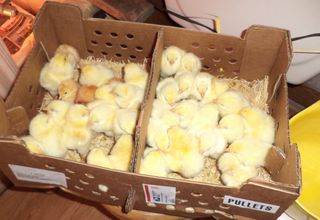 see, chickens don’t just appear, and they are not brought by the stork to deserving families, they come from somewhere – or in other words, someone breeds them. Few of the breeds of chickens people farm have any resemblance to wild breeds, and wild chickens are pretty rare these days due to our destruction of wildlife habitat for cities and farm land; never mind that there was chickens, like Europeans, are an invasive species to this part of the world. So most of the domesticated birds come from a hatchery; either directly – or indirectly.
 Roosters don’t lay eggs for one, and for two, if you have more than one (or maybe two) roosters, they will kill each other. So the chicks are bred, the females are sold through mail order and the males are killed. Yup, right into the wood chipper. When people get back yard chickens, they often order from a breeder or hatchery. I know some get “second hand” or even call them “rescues”, but where do you think those birds came from before you got them? Buying chickens is putting money into the industry that breeds them for profit. This is the industry of commercial chicken breeders, and they are often the same places that supply big farms, as well as small farms and your average urban gardener with their new found interest in permaculture. And I didn’t even talk about the forced insemination.
 Profane Existence